Optimal Commercial Fridge Temperature: A Comprehensive Guide for Food Safety & Efficiency
For any business in the food industry, from bustling restaurants to local cafes and grocery stores, the commercial refrigerator is the heart of the operation. But it’s not enough to simply have one; it’s crucial to maintain the optimal temperature. The right temperature setting is the first line of defence against foodborne illnesses, a key factor in maintaining food quality, and a significant contributor to your energy bills. This guide will walk you through everything you need to know about commercial fridge temperatures, from the golden rules of temperature ranges to troubleshooting common issues.
Why is Commercial Fridge Temperature So Important?
Maintaining the correct temperature in your commercial refrigerator is not just a suggestion; it’s a critical responsibility. Here’s why it matters so much:
-
- Preventing Foodborne Illnesses: The temperature range between 5°C and 57°C is known as the “Danger Zone.” In this range, bacteria like Salmonella, E. coli, and Listeria can multiply rapidly, leading to foodborne illnesses. A properly chilled refrigerator slows down this bacterial growth, keeping your food safe for consumption.
- Maintaining Food Quality: Incorrect temperatures can ruin the texture, flavour, and appearance of your food. Produce can lose its crispness, dairy products can spoil, and meat can become discoloured. Proper temperature control ensures that your ingredients and prepared dishes remain fresh and appealing to your customers.
- Maximising Energy Efficiency and Reducing Costs: A refrigerator working harder than it needs to will consume more energy, leading to higher utility bills. By setting the optimal temperature and maintaining your unit, you can ensure it runs efficiently, saving you money in the long run.
- Compliance with Food Safety Regulations: Health departments and food safety agencies have strict regulations regarding food storage temperatures. In the UK, for example, the Food Standards Agency requires that cold food be kept at 8°C or below, with a recommendation of 5°C or below.
- Beyond general guidelines, businesses must also adhere to specific regulatory frameworks like HACCP (Hazard Analysis and Critical Control Points) principles and local health codes, which often mandate precise temperature logging and corrective actions. Failure to comply can result in fines, or even the closure of your business.
The Golden Rules: Optimal Temperature Ranges
While there can be slight variations depending on the specific food product, there are some golden rules for commercial refrigeration temperatures:
-
- Commercial Refrigerators: The ideal temperature range for a commercial refrigerator is between 2°C and 4°C. To be on the safe side and to comply with most health regulations, it’s best to keep the temperature at or below 5°C.
- Commercial Freezers: For long-term storage of frozen goods, the temperature should be set to -18°C or lower. This temperature stops bacterial growth and preserves the quality of the food.
- Blast Chillers: These units are designed to cool hot food down quickly, moving it through the “Danger Zone” as fast as possible. The standard is to cool food from over 60°C to below 5°C within two to four hours.
-
Understanding Different Types of Commercial Refrigeration Units
Commercial refrigeration comes in various forms, each designed for specific needs. While the core temperature principles remain, understanding the nuances of each type can optimise performance:
-
-
-
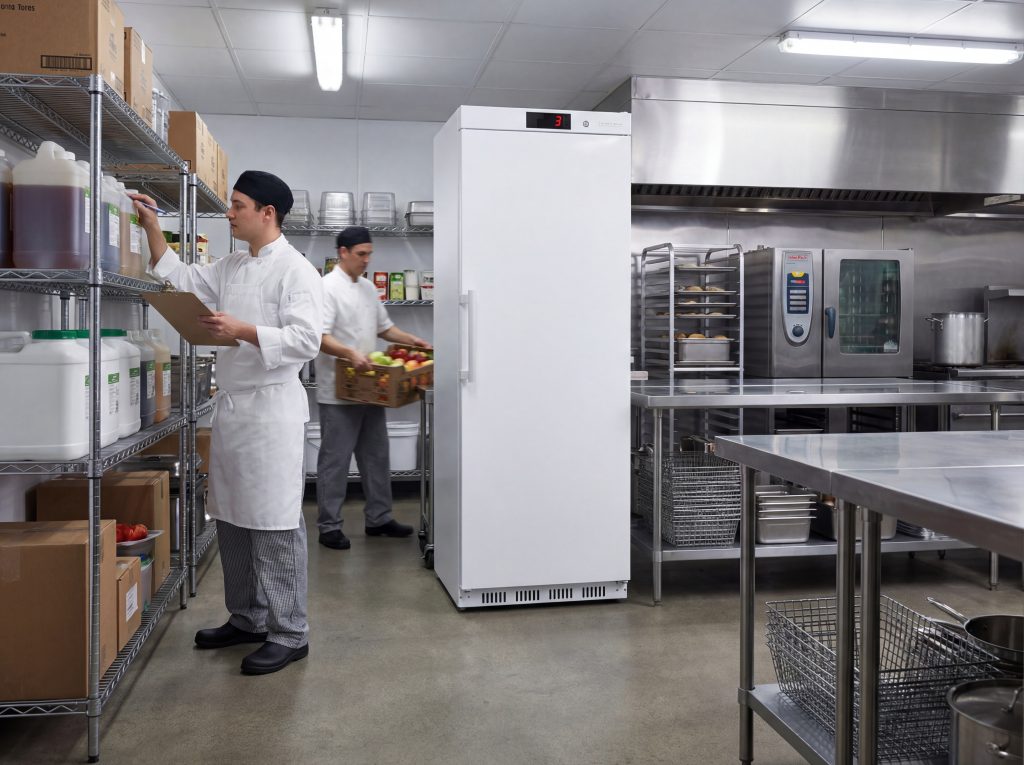
- Reach-in Refrigerators/Freezers: Standard upright units, common in kitchens
- Walk-in Refrigerators/Freezers: Larger, room-sized units for bulk storage.
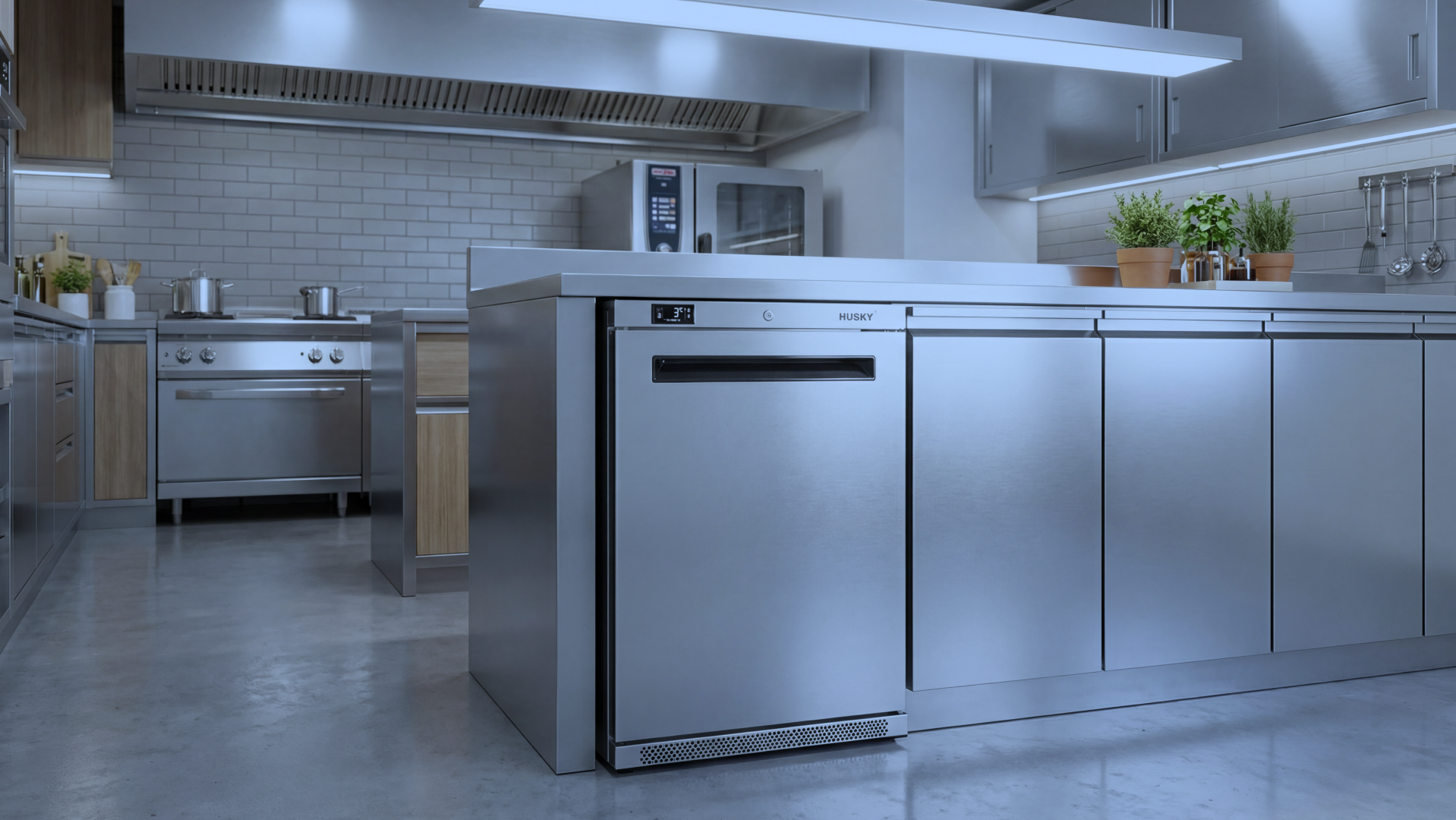
- Under-counter Refrigerators: Compact units for tight spaces, often used for specific ingredients.
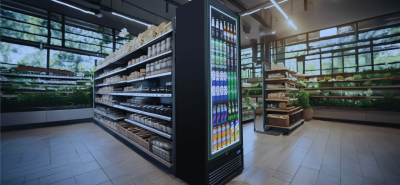
- Display Cases: Designed to showcase products while maintaining safe temperatures, often with specific airflow considerations.
-
-
A Place for Everything: Specific Temperatures for Different Foods
Not all foods are created equal when it comes to temperature requirements. Here’s a breakdown of the ideal storage temperatures for different types of food:
| Food Category | Ideal Temperature Range |
| Fresh Meat & Poultry | 1°C to 3°C |
| Fish & Seafood | -1°C to 1°C |
| Dairy Products & Eggs | 1°C to 4°C |
| Fresh Fruits & Vegetables | 2°C to 4°C |
| Ready-to-Eat & Prepared Foods | 2°C to 4°C |
| Beverages | 2°C to 4°C |
Best Practices for Maintaining Optimal Temperatures
Setting the right temperature is only half the battle. You also need to ensure that the temperature remains consistent. Here are some best practices:
-
- Proper Food Storage Techniques: Don’t over-pack your refrigerator. Allow for proper airflow around the food items. This ensures that the cold air can circulate and keep everything at the right temperature. Keep food covered to prevent cross-contamination and drying out.
-
- The Importance of Regular Monitoring: Use a refrigerator thermometer to check the temperature of your unit daily. Don’t rely on the built-in thermostat, as it can be inaccurate. Consider investing in advanced temperature monitoring systems, such as IoT sensors with remote alerts and data logging capabilities, for continuous oversight and proactive issue detection. Regularly calibrate your thermometers to ensure their accuracy.
-
- Defrosting and Freezing Best Practices: Defrost food in the refrigerator, not at room temperature. This keeps the food at a safe temperature as it thaws. When freezing food, do so in small batches to ensure it freezes quickly.
-
- Managing Temperatures During Busy Periods: During peak business hours, the refrigerator doors will be opened more frequently, which can cause the temperature to rise. Be extra vigilant about monitoring the temperature during these times.
-
- Energy Efficiency Beyond Temperature Settings: Optimise energy consumption by ensuring doors are sealed tightly and equipped with alarms for prolonged openings. Consider upgrading to LED lighting inside units and strategically placing units away from heat sources to reduce their workload.
- The Role of Staff Training: Ensure that all your staff members are trained on the importance of temperature control and best practices for food storage.
- Preventative Maintenance Schedule: Implement a routine preventative maintenance schedule.
This includes regular cleaning of condenser coils, checking door seals for wear and tear, and ensuring proper ventilation around the unit. Proactive maintenance can prevent costly breakdowns and ensure consistent temperature control.
Troubleshooting Common Temperature Problems
Even with the best practices, you may still encounter temperature issues. Here are some common problems and how to troubleshoot them:
![]() Temperature is too high:
Temperature is too high:
![]() Temperature is too low:
Temperature is too low:
-
- Check the thermostat setting to make sure it hasn’t been accidentally changed. Look for any ice build-up that could be obstructing airflow.
- When to call a professional: If you’ve checked for these common issues and the temperature is still not correct, it’s time to call a qualified refrigeration engineer.
Conclusion
Maintaining the optimal temperature in your commercial refrigerator is a cornerstone of a successful food business. It’s not just about following rules; it’s about protecting your customers, preserving the quality of your products, and protecting your bottom line. By following the guidelines in this guide, you can ensure that your food is always safe, fresh, and of the highest quality.