Commercial Fridge Installation: A Space & Planning Guide for UK Businesses
A commercial fridge is one of the most important purchases a food or drinks business will make – but the buying decision doesn’t stop once the unit arrives. Where and how it’s installed has a direct effect on how efficiently it runs, how long it lasts, and how much hassle you’ll face if something needs fixing down the line.
Every year, businesses order a fridge or freezer only to discover it won’t fit through the delivery entrance, needs more ventilation clearance than the space allows, or requires an electrical supply the site doesn’t have. These aren’t rare mishaps – they’re some of the most common (and most avoidable) installation problems in commercial refrigeration.
This guide walks through the practical planning steps to take before your new unit is delivered, so installation day goes smoothly and your fridge performs the way it’s supposed to.
1. Measure the Full Delivery Route, Not Just the Final Spot
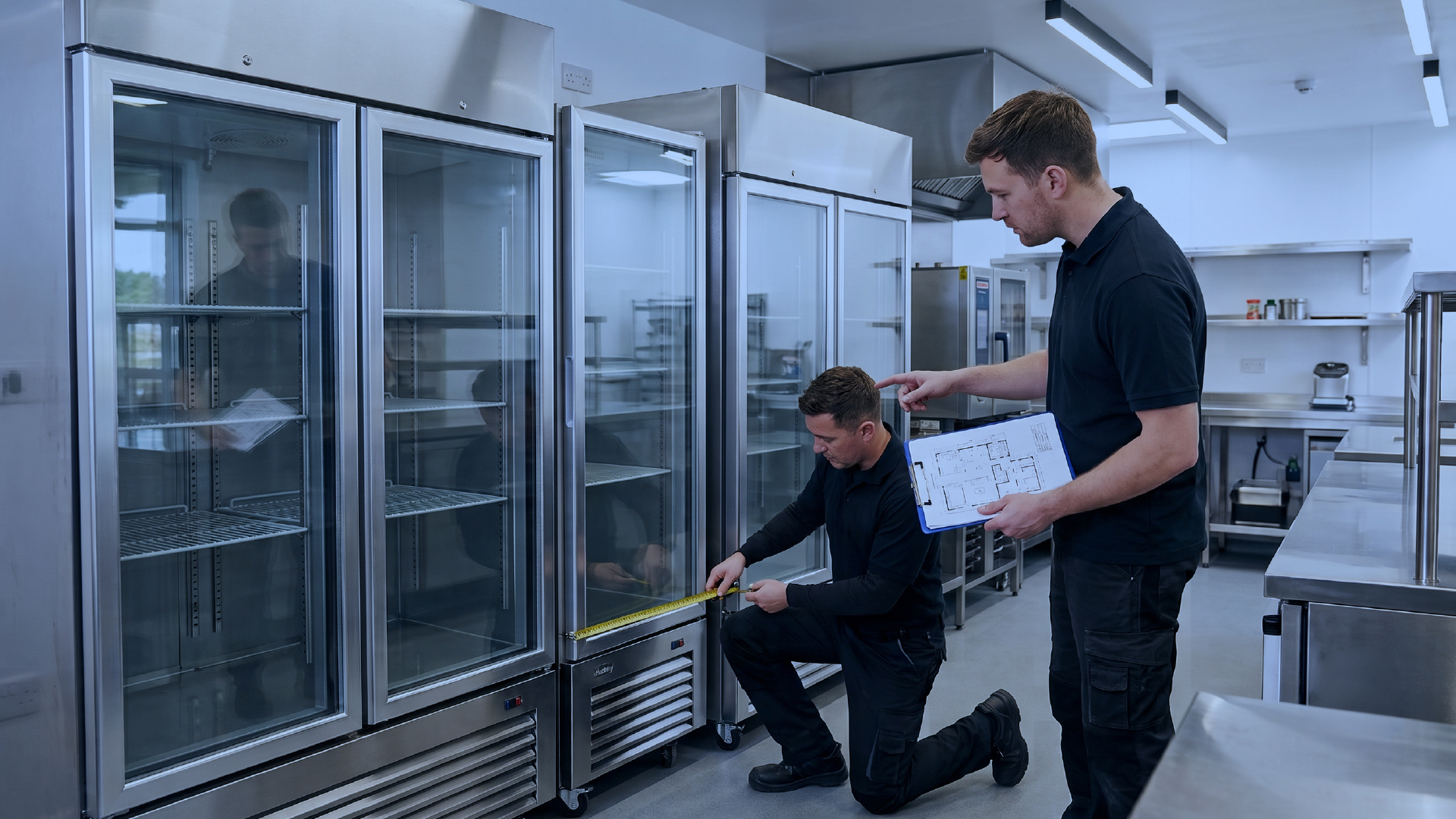
It’s easy to measure the space where the fridge will sit and stop there. But the unit also has to get to that spot, which means checking:
- Doorway and corridor widths along the entire route, not just the final doorway
- Ceiling height where the appliance will need to tilt through stairwells or tight turns
- Lift dimensions and weight limits, if the unit is going to an upper floor or basement
- Any sharp turns where a long, boxy fridge or chest freezer may not be manoeuvrable
A unit that’s a perfect fit for the final location is no use if it can’t physically get there. If you’re at all unsure, it’s worth sharing rough building dimensions with your supplier before you order – Husky’s specialist delivery team can advise on access requirements as part of the delivery process.
2. Give the Compressor Room to Breathe
Every commercial fridge and freezer generates heat as it cools, and that heat has to go somewhere. Most units vent through the front, top, or back, depending on the model, and each needs clear space around it to work efficiently:
- Rear-vented units typically need several centimetres of clearance behind them
- Top-vented units need clear airflow above, so nothing should be stacked or stored on top
- Front-vented (underbar and low-line) units still need surrounding air to circulate freely and shouldn’t be boxed into a tight recess
Cramped ventilation is one of the most common causes of a commercial fridge working harder than it needs to – which shows up as higher energy bills, a shorter compressor lifespan, and a greater chance of breakdowns. Always check the specific clearance figures in the product’s installation instructions, as these vary between models.
3. Confirm the Electrical Supply Before You Order
Commercial refrigeration units draw more power than domestic appliances, and getting the electrics wrong is one of the costliest mistakes to fix after the fact. Before choosing a spot for your fridge, check:
- Whether there’s a dedicated socket close enough, ideally without needing an extension lead or multi-plug adaptor (both of which are a fire risk and often invalidate warranties)
- The voltage and amperage the unit requires, and whether your existing supply can handle it
- Whether larger or multiple units will need a qualified electrician to install a new circuit or isolator switch
- Local isolator access, so the unit can be safely switched off for cleaning or maintenance without unplugging it
If you’re planning to install several units – for example, fitting out a new convenience store or catering kitchen – it’s worth getting an electrician to assess the site’s overall capacity before any equipment is ordered.
4. Check the Floor Can Take the Weight – and Is Level
Commercial fridges and freezers are heavy, especially once loaded with stock, and they need a floor that’s both level and strong enough to bear that weight over time. An uneven floor doesn’t just look untidy – it stops door seals closing properly, which lets cold air escape and forces the compressor to work overtime.
Where possible, use a spirit level to check the intended spot and address any dips or slopes before delivery day. For upper floors, it’s also worth confirming the floor loading capacity, particularly for larger catering or display units.
5. Think About Noise in Customer-Facing Areas
Refrigeration units aren’t silent, and compressor noise is easy to overlook until a unit is running in a small café, front-of-house retail space, or open-plan bar. If the fridge will sit close to customer seating or a shop counter, it’s worth asking your supplier about the noise output (measured in decibels) for the specific model, and considering options designed for quieter operation in customer-facing settings.
6. Plan for Ongoing Access, Not Just Installation Day
A fridge that’s perfectly positioned on day one can become a maintenance headache later if there’s no room to access the condenser, filters, or service panels. When planning the space, leave enough room for:
- Routine cleaning of condenser coils and grilles
- Engineer access for servicing or repairs, without needing to move the whole unit
- Simply pulling the unit out from the wall if needed, rather than it being permanently boxed in
A little extra clearance now can save a lot of disruption – and expense – if a technical support call-out is ever needed.
A Quick Pre-Delivery Checklist
Before your new commercial fridge or freezer arrives, it’s worth confirming:
- The delivery route is measured, door-to-door
- Ventilation clearance matches the manufacturer’s specification
- The electrical supply is suitable, with a dedicated socket or circuit
- The floor is level and rated for the unit’s loaded weight
- Noise levels are appropriate for the space
- There’s ongoing access for cleaning and servicing
Getting these details right before the unit turns up doesn’t just avoid a stressful delivery day – it protects the investment you’ve made, keeps running costs down, and reduces the chances of an early breakdown.
If you’re planning an installation and want advice specific to your site, Husky’s team can talk through space, access and electrical requirements alongside our specialist delivery service, and our technical support team is on hand if you need help once your unit is up and running.